Saturday, 21 May 2022

Life Lessons - through bliss, blessings & beauty spread by these Bulbuls

Tears of joy 

Tears of joy  - Mrs & Mr Universe / Best Parents / The Bold and The Beautiful

Am choking with tears as I pen these thoughts….I know that ‘this too shall pass’, but wanted to at least register to myself this blessed moment. 

Also, I know the trope of our ‘anthropomorphic’ lens of looking at the lives of these birds and so painting layers that possibly don’t exist. But then there is no other way to look at it!

New Neighbors

Out of the blue…..this beautiful couple decided to move-in and bless our lives by building their nest on the Banana plant. And what followed over the next few days has been a traumatic, joyful and very lively life for our family.

Also – forced us to look hard at ‘what is life’ and the way we are getting on with it.


New Arrivals

We watched the Mom brooding the three eggs right through the first week. We were picking up the tunes / ways of our new neighbors by now.

And then on fine day there were 3 fresh arrivals. From that day on both parents were super busy fetching seeds, fruits, insects and what-not to keep the ever hungry tiny-tots satiated.

Through the first week we watched the babies slowly grow in size, gain feathers and become more demanding for food as soon as one of the parents arrives.  

While the Mom fed the chicks  - it was an absolute pleasure seeing the overjoyed Dad just flying all around, above, below the nest and doing good surveillance while making pleasant cooing noises. This will remain the perfect picture of 'true happiness' for me !


Terror Strikes

One of these happy days almost ended and as we sat down for dinner - there was a sudden commotion near the banana plant and we realized the local rogue, neighbors cat, had jumped at the nest. By the time we rushed out and scared the cat away - it was already fleeing with two of the chicks in its mouth. We chased and made the cat drop them - but by then it was too late for the two.

There was a complete disarray around the nest, the banana leaves protecting it, the few shrubs etc we placed around to protect it from the cat. It had ripped through these by jumping very high and coming down on the nest. 

It was already quite dark and both parents were nowhere to be seen.....the third chick inside the nest appeared dead - and we were inconsolable that night at the plight of such a happy family.

A whole new day

The crack of dawn had seen our own family in a very distressed state at the meaninglessness of life and the devastating tragedy we had witnessed the last night. 

It was with such heavy hearts that we saw the mother bird come and check the remains in the nest.....it was a very depressing sight. After some time we saw that the Mom and Dad were back to their duty of fetching food for the nest ! And then we saw that the third chick was alive and well. It was a huge  relief and we thanked God for this !

It had been raining right through the night - and the chick had survived the cold night all alone. The zeal the parents were now putting into feeding the chick, drove us also into action and we did our bit in thoroughly fortifying the nest / banana tree with thorns and such so as to ensure the cat wouldn't mess around again.  


Regardless of the odds, when it is time you 'Wing it'

Over the next 4 days we saw the parents totally dedicated in feeding the kid right through. It was a great illustration for all of us about the love, affection and sacrifices that parents make ! We were also on our guard and kept watch right through, shooing the cat away whenever it came lurking around - no doubt scheming its own dark designs. 

The parents were relentless in prodding the kid to take flight…..


Finally on the fifth attempt, the kid winged 4-5 short flights and reached our neighbor’s backyard. The cat was prowling around – and the parents were both perched on that side possibly distracting the cat with their sounds. 

But then the kid stopped moving, possibly tired, and was just a meter away from the cat behind a shoe rack. The parents were monitoring the cat as well as the kid as can be seen in below video - but it was too risk as it would take a split-second for the cat to pounce on the chick if it senses it. 


Despite both the parents squeaking and making sorties over me - I picked up and returned the kid to the nest and came into the house (for a window-view of the nest). The parents already zeroed in on the kid and started cuddling + feeding it right away. The parents now were focused on getting the kid all the energy it needed by feeding it on a war footing....


And then towards afternoon the parents prodded the kid for more sally to taking flight.....and this time the kid did keep trying and went quite far away in its short flights. The parents were busy following it and also kept coming back to the cat to keep it distracted and move in some other direction. But then it started raining.....and then heavily and we lost contact with the family as it moved on.

Big lesson - life is fraught with risks. But when it is time, go for it 100% and give it all you have. Half measures wont do at all. 


Meow

Splintered moment

Bird calls

Peal of life

Nest

is just a phase of life


`

`

The cat meows and terror runs through my body as I involuntarily brace up to rush out……only to then realize that ‘all is well’, the birds are gone and safe…Thank goodness!

Morning starts with the squeaks of bird calls filtering into the house – and amongst them as I hear the peal of a Bulbul’s call - I rush out to catch a glimpse of the Angel.

`

The bare nest has been staring at us since the family has moved on.  Makes one think - this must be the meaning of 'Vanaprastha' as well. As our kids take wing, and our nest has served its purpose: no point hanging on to it. We possibly also need to move on into something more convenient, that serves the purpose.`


Wednesday, 11 October 2017

Language Mishapps...

Given the quirks of English language, it is easy to make unintentional but wrong usage. Thankfully this is easily remedied by just being ‘aware’ of the pitfalls!

From time to time I keep pointing these out to people I interact with, but today I thought I will make a decent note and I intend to keep adding to this ‘Donts’ list going forward ! Request submissions from your experience also – as welcome additions to this initial list !

  1. Few / Little – Example of wrong usage is ‘I have few friends'. This statement really means ‘I have no friends at all’ and so it is a very sad/negative statement. Intention was actually to state ‘I have some friends’. So it is better use ‘some’ instead of ‘few’ to avoid this trap. If at all we need to use few….then we need to be careful and qualify it with ‘a few’ instead of ‘few’: ‘I have a few friends’. 
  • Same is the case for ‘little’: if we write ‘There is little time left to....' it actually means 'There is almost no time left to....' ! So here also better to use ‘some’ or ‘a little’ instead of just ‘little’.

  1. ‘Improvised’ – Does not mean ‘improved upon’. It means ‘quickly cobble up something’ and actually in many occasions (where it is being used) connotes a negative message ‘ad-hoc act in a hurried manner to make up for lack of advance preparation’.  

  1. Query / Clarification – Example of wrong usage is ‘Attached document on this…..Please write to me if you have any clarifications on this document’ – What was actually meant is ‘if you have any queries’. Or better to write ‘…if you need any clarifications..’.

  1. Adapt / Adopt – Example of wrong usage is ‘We have adapted Testing-Automation in our pilot projects’. We are not ‘modifying Testing-Automation to suit our purposes’ nor are we ‘changing ourselves and our processes to fall in line with expectations of Testing-Automation’ (this is the meaning of Adapt…Adaptation). What we really needed to use was ‘Adopt’ meaning – we have ‘made Testing-Automation part of our own processes' (as we 'adopt' a child into our family).

  1. ‘I am afraid’/ ‘Suspect’ / ‘Doubt’ – Example of wrong usage is ‘I am afraid we will make the Release in time’ whereas the intention was to communicate the bad-news / risk that the Release-timeline will slip. Whenever ‘I am afraid….’ is used, it has to be followed by the negative statement itself. So the correct statement is: ‘I am afraid we will not make the Release in time’.
          Extending this example for usage of ‘suspect’ and ‘doubt’ – the correct usages are:  

  • ‘I suspect we will not make the Release in time’ (usage same as for ‘I am afraid’)
  • ‘I doubt if we will make the Release in time’  (usage opposite from ‘I am afraid’)

Tuesday, 17 November 2015

Rogue in Vogue - Freakonomics !


Freakonomics – A Rogue EconomistSteven D. Levitt & Stephen J. Dubner

I like the ‘Rogue’ part……..has the right amount of irreverence and mockery to convention as is done by some of the other 21st century lingo of ours:


All of which snook at the corporate straight-facedness.
It is also in keeping with the latest edition of:  

The book is also unconventional from the angle of teasing out answers for disparate but interesting curiosities……so the title of this could as well have been ‘Problem Solving Skills – applied to the questions you always had but never knew how to solve!’.

Steven is an Economist with an uncanny ability to solve these social issues from an Economist standpoint. Normally these questions can be debated in any which way one wants to using conventional wisdom. But in here, using a ‘treasure-hunt approach’ and analytical-tools of Economics the author has a go at solving these issues with an unconventional wisdom in knowing what & how to measure relevant parameters:

What is common between Sumo Wrestlers and School teachers ?

Steven brings his analytical eye to this cheating and human behavior cracking the tough nuts of such diverse domains. Summary from this chapter:

·        Money doesn’t win elections
·        Drinking 7 bottles of water a day doesn’t really help
·       Introducing a low monetary penalty for a default – will legitimize the mistake morally and encourage it actually. Baby sitting of toddlers for late pick-ups by parents illustrates this point.
·        People are honest about 87% of the time even though no one is watching them. This is drawn from data of a bagel business with corporate employees free to pay by themselves without monitoring.

How are Ku-Klux-Klan (KKK) Members like Real-Estate Agents?

‘Information Is King’:

·    The KKK met its waterloo when its operational details (roles/rituals/activities…) were disassembled and circulated to all by a certain Kennedy to the public at large.
·    Similarly Real-Estate Agents play on their advantage of having deeper and broader real-estate data and information. However studies reveal that a Real-Estate Agent don’t wait for the best deal possible…..their business thrives on throughput and so after a certain basic asking price is met and minimum shelf-life has passed, the incremental % commission they earn does not warrant waiting on  for a possible higher sale value which the Seller might be more interested in! Online Internet Portals for Rentals could prove to be their Nemesis !
·      Life Insurance Premium peddlers have met similar fate when the best policies in the market are available for ready comparison through online portals.
·        Same is the case for Second-hand-car prices, Casket sales etc.

However there is a slight variation of this in the case of Dentals (root-canal is an almost blind prescription  I understand for any dental ailment just as full diagnostic tests are becoming a norm for any ailment !) and Surgical Deliveries (compared to natural/normal deliveries of babies) etc – where the patients are preyed upon by the ‘Experts’ with a ‘Fear’ factor: why take a risk when the sure option is before you ?

·      In my opinion this has further exacerbated in a different angle due to publicity-quotient gained by the double hysterectomy case of Angelina Jolie. 

Why Do Drug Dealers Still Live with Their Moms?

With some meticulous analysis of the drug-money-accounting that serendipitously comes by the way of the author – it is shown that the hierarchy of Drug-Mafia is very similar to any McDonald's sort of MNC Corporate hierarchy! And the comparison extends to the kind of ridiculous salaries the top-honchos earn compared to the toiling-worker at the bottom of the crushing pyramid. So Drug Dealers stay with their Moms because they don’t earn enough to move out on their own!

·        Its not clear if some of the well paid dealers also stay with their parents? Have a suspicion about a cultural angle at play here (may be this is my Hollywood framed self speaking – since most peddlers I see in movies are of Latin-American / African origins) – knowing that Americans typically make a fetish out of moving / staying away from their parents. For many cultures including Indian and I suppose many Latin American countries as well – staying with parents is nothing downtrodden nor to be looked down upon at all actually. In fact the other way around is true! Though I must admit things are moving out the American way….

·        Have seen a similar theme in a book I came across recently viz. ‘Who will cry when you die’. This title doesnt fit to be the raison d'être of a persons life and it does sound like making amends for a guilty-feeling for a life lived well and then for dying (isnt it a paradox ? sounds confusing enough: one needs to live so that maximum people 'quality/really' cry after one dies ! Reminds me of Nietche's joke in his 'Thus Spake Zorathustra' where a preacher teaches unto his followers the purpose of life thus: 'To Sleep Well' ! As only a clean soul free of all jealousy/envy/greed,  and who has honestly toiled right through the day earns a well deserved sleep from exhaustion). But I guess this is not the only unimportant aspect of life that is becoming the norm of today's world. For sure there are also no right/wrong issues involved here. Its a matter of a different point-of-view ! At least that is what I tell myself every morning when I see my neighbors drop their kid in a car - to cover a distance of about 20 meters to the gate (from here the school bus picks up) since it is getting wet (clouds) and cold (20 degrees centigrade) nowadays !

Where Have All the Criminals Gone?

With some meticulous analysis of various top-contestant theories – the author arrives at the best possible explanation for reduction of crime in the US starting the 90s : this is the legalization of abortion in the early 70s !

What Makes a Perfect Parent?

Risk = hazard + outrage.

A long drawn and silent death by heart-disease attracts no outrage compared to a dreadful gunshot. The ‘hazard’ in terms of % is much higher for a heart-disease or a swimming-pool (due to accidental deaths therein) are than a Gun-possession. But due to lack of sufficient outrage it loses out to Gun-theme which draws more attention (either way) !

  • Similarly while the gain of using a car-seat-belt for toddlers is infinitesimal, the outrage at an odd parent (even to those parents) for not spending the $ 200 odd amount for this thing for whatever it does (or doesn’t) to protect their precious baby just does not stick. These are the parents who are obviously proud to have spent the $200 for this unnecessary contraption (even in case they are made to see this fact).  This is a variation of the fear-factor we discussed earlier. The author gives some more examples of such kind: child-resistant-packaging, flame-retardant pajamas, keeping children away from airbags in cars, and safety draw-strings on children’s clothing.
  • What does it matter if parents are manipulated by experts and marketers? Shouldn’t we applaud any effort, regardless of how minor or manipulative, that makes even one child safer?

On the Nature-Nurture Debate on the effectiveness of parenting, again Steven gets cracking on data and comes out corroborating some of the age-old truths we have always possibly known -

  • top-down influence of parents is overwhelmed by the grassroots effect of peer pressure, the blunt force applied each day by friends and school-mates.
  • it isn’t so much a matter of what you do as a parent; it’s who you are.
  • even in adopted children, the nurture effect takes place in the long run – if not in the immediate test-scores of the school going kid which might reflect the genetics of the child!

Friday, 13 November 2015

Thursday, 12 November 2015

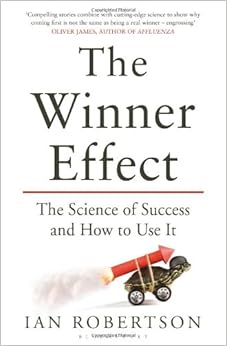
The Winner Effect

The Winner Effect: The science of success and how to use it  – Ian Robertson


This brilliant masterpiece gives us lot of insights into winning and losing, domineering partners (and how couples get into such a 1-0 situation) and much much more. It is especially delightful because each of the subtle insights from neuroscience research are nailed down with very vivid descriptions using scores of real-life examples from well known personalities/events (Tony Blair, Bill Clinton, Picasso, Sarkozy, Einstein, Napolean, Hitler…..) and experiments. Because of all these vivid illustrations – the below summary is at best a drab and colorless outline.

Ø  Are Winners born or have to earn their success? 

Insights:

·        Breeding/Born-into-right-family and even Wealthy definitely helps. But at the same time:
o   believing that one is endowed with winner’s qualities can leave some people demoralized and psychologically crippled !
o   the rich, born-to-win children spent more time either on their own or with adults other than their parents (than the poorer children) and they therefore also felt less emotionally close to their parents (who have much higher opportunity cost for their time).
o   Motivation is a crucial ingredient for success in life. Once the internal motivator is activated, people put their body and soul into their work with little thought for how much they are paid. However for the internal motivator to be switched on as a child – it needs some cajoling/encouraging/string-arming/forcing from parents & teachers. Without this external spur – the child may never get over the hump to reach a stage where achieving the activity becomes intrinsically rewarding. Knowing the presence of a huge fortune – can sabotage this initial effort/goalpost to climb up the hump making this motivation internalized.
o   Setting demanding but attainable targets (neither too high nor too low) consistently does the trick for winners in general.  If your parents are geniuses how can you set goals that don’t look trivial? Definitely an issue in cases of kids with overzealous parents. It helps if parents:
      • explain the arduous path to their success instead of ‘hiding the ladder’ (to boost their own ego that they were born genius) so to speak!
      • make kids see the activities as learning-focused rather than performance-focused (comparative performance, passing a judgment on their self-esteem rather than just the activity).
      • help kids achieve an ‘incremental’ attitude – by replacing ‘I am no good at Maths’ thought to ‘I didn’t like Maths at school and lost interest in it’, or ‘I am no good at sports’ to ‘I need to find a sport that suits my abilities’.
      • rather than praise them for being ‘bright’, praise them for their consistency of efforts and grit (both these are within their control – and help them improve upon going forward as well !).

Ø  Feeling and behaving like winners – already boosts our chances of success!  The body language of a winner is apparent to others as well immediately further adding to the winning spirit !

Ø  Having a stack of wins before the big match always helps……so its a good idea to take and crack some easier exams before coming to grips with the real challenger ! The winning streak is not just an emotional or positive attitude thing effecting the conscious and unconscious mind, it actually changes the physical constituents enabling the success formula in the brain/body!

Ø  Having belief that you have control on your life protects one from the ravages of stress. Those who believe this will use their power to manipulate both internal as well as external resources so as to remain in control. Winners also live longer because it strengthens their belief in their self and their control over the world and this belief inoculates them against the effects of stress on their bodies!

Ø  One of the major burdens always weighing on the mind is acceptance by others. Winning  allays this stress from a threat of rejection by others and removes a major stress from the lives of Winners.

Ø  Power blinds people to the societal needs and overall good – making them ego-centric and making them believe in their godly status and fall for the ‘Gamblers fallacy’ – going by their infallible gut feel, their killer-instinct: at the cost of common sense. Its always good to have old friends and family members have a check on oneself – if one is still being sane ! This is no laughable matter –as illustrated by the colossal damages caused by the demi-gods running the show at Enron, RBS and Lehman Bros (and to quote historic events – ‘The Russian solstice’ of Napolean and later by Hitler). Overnight the decisions and behavior of these once revered figures – look astoundingly ridiculous in retrospect, possibly even to these very guys. But when the heat is on – all the crème-de-la-crème are part of this group-think and set out to out-run each other at the new game, while ostracizing any sane/questioning voices that may come up.

Ø  The opposite effect is also true – our best performance is indeed limited to the glass ceiling we unconsciously develop about our abilities over a period of time. This again is the ‘Winners born’ attitude in a negative way. Question all your conscious and unconscious limitations! With focused practice you could crack that high-score now just to yourself if not for anyone else!

Ø  Finally, the win for the ‘I’ is a race that can never be won because ‘I’ itself is a combination of all the reflections of one’s network of relationships and interactions in this world. So going after the ‘I’ brings with it all the unconscious prejudices and stereotypes in our own and others’ brains. Real winners thrive on being able to have an impact and do not cripple themselves by believing their success to be due to inherited, unchangeable qualities.

Wednesday, 30 September 2015

My brush with Toastmasters

Below are two speeches of mine – during the brief period I had become involved with Toastmasters recently.
  • First one is the prepared-speech CC1-Icebreaker speech ‘Introducing myself’.
  • Second one is the prepared-speech CC2- ‘Books Books Books’

Monday, 18 July 2011

Hands and Heart on the job....

It is raining here in The Netherlands
A cloudy season and crazy winds blurring all directions
Umbrellas are of no help nor any wands
Everyone reaches office and home wet and blown
Wistfully thinking about the always sunny distant lands

Sometimes the Sun does pop out round and bright
All and sundry just stop and relish the bonus of the moment
And behold the riot of colors that come alive in the golden sunlight
Mere mortals can neither conjure up nor telepathise the Gods that be
But just chug along connecting the dots till the next inspiring sight

Saturday, 9 April 2011

The Global Soul - Pico Iyer


My take…
Pico Iyer has been a delightful and an absolutely wonderful find for me and am glad having found this hidden treasure. Hope to read all of the other books by Iyer as well soon...

Ten years back - this book would not have made much sense to me. I'm glad I have read it late in life.....after my international assignments/travel started rather than earlier. Also I think people who have done good amount of travel away from 'home' would appreciate many aspects of this book better.

Looking at my kids and my life in the last decade - can see that this 'global souls' issue is becoming a bigger slice of our lives given the frenetic Globalisation that is a norm in today’s world.

Despite the individual backgrounds and cultures, all of the Global-Souls seem to face the same set of situations which pose hard questions of 'Where am I ?' , 'Where am I from?' and the eventual ‘Who am I’ facet of conversations that nonchalantly keep plucking at raw chords in the jangled frame of a Global-Soul.

The connectedness brings to mind a wonderful movie ‘Babel’ in which also there are different types of worlds and cultures are getting knocked down as they get enmeshed into others. However this book is about the disconnectedness that comes with the Global Soul – it is about the dreams, of displacement, of being lost within a labyrinth of impersonal spaces and gives some readings of how this shaking of the planet felt and looked at ground level to a typical global villager, admittedly a privileged global soul, making his way through a scrambled world and sorts through the confusion of ‘’post-denominational’’ temples and self-created traditions.

The book puts in perspective the sense of 'global souls' in us. I feel the Author as well as his friends quoted are at the extreme end in terms of cross-cultural-upbringing, global-travel and pace. My own travel travails seem quite trivial in comparison. This book is centered around ''keeping the souls intact in the face of pell-mell globalism''. Iyer is a self-acknowledged ‘previleged global-soul’ because of growing up simultaneously in three cultures, none of them fully owned, growing up without any relatives in the same continent, without learning the mother-tongues (different) of his parents, born to Hindu-born Theosophists - educated entirely in Christian schools - spending most time in Buddhist lands, ''a no-wherian falling between all categories'': ‘’A wanderer from birth, I chose to live a long way from the place I was born, the country in which I work, and the land to which my face abd blood assign me – on a distant island where I cant read any of the signs and I will never be accepted as even a partial native’’. This is a book on global-souls in terms of their dreams, of disconnection, of displacement, of being lost within a labyrinth of impersonal spaces.

Other than this 'Global-Soul' aspect, the book is also a very interesting read due to some punchy quotes and informative discussions. For example the author gives his take on a few of my favorite authors (VS Naipaul, Kazuo Ishiguro, Michael Ondaatje) and it is an enjoyable and absolutely insightful summary. Also the author beautifully weaves the ‘Global Soul’ theme into (a topic that interests me a lot) the quest by the immigrant-soul trying to come to grips with: 
  • their motherland-culture (dearer now because of the separation perhaps), 
  • their ambitious intellectual destination (that they had fallen in love with and ‘’arrived in life’’ at last) in the foreign lands (only to find it a mirage), and
  • the culture they are actually living-in the foreign lands (which is neither here nor there – but is a fast-forward into another age and era )
Summary through direct extracts from the Book
The global village has given more and more of us the chance to move among the foreign, and so to simplify and clarify ourselves in this way; being in so strange an environment is the first step towards living more slowly, and trying to clear some space, away from a world ever more revved up. In our global urban context, its an equivalent to living in the wilderness.

Iyer feels ‘as the world order spins, ever more intensely, so, too, do our dreams, and almost any immigrant who arrives today at the place he’s hoped for will find it’s become somewhere else’. The 'global' we so readily attach to every product we wish to make seem desirable stuck a less happy note when it came to 'global hearts' and 'global loyalties'. From the profiles of Iyer, his friends and the increasingly globalised world - it seems inevitable that nationalities will become more and more subjugated to international interests. Arundhati Roy's speech of WE seems less disturbing given this 'globalisation' trend. Although as pointed out in the book itself, this 'global soul' issue even today concerns a tiny minority while for the majority the issues remain: how to get food on the table, find shelter for children, how to live beyond tomorrow: 'While we worry about email and trans-provincialism, two thirds of the people in the world have never used a telephone' (must be true a decade back when this book was written!).

The book begins with Iyer’s house along with the rest of the mountainside are turned to ‘smoking ash gray sea’ by a forest fire and he (who referred himself as an Indian born in England and moving to California as a boy, with no real base of operations or property even in his thirties) had really become homeless. A few weeks later just when the final touches are being made to the new house (in the spirit of California – which is a society built on quicksand, where everyone is getting new lives every day), an earthquake in California which shook the foundations of the neighborhood. A few months later, huge rains came down and sent whole parts of the slope underneath the house sliding towards the city below.

Having lost his house to the fire, Iyer begins his journey for home and makes this quest the subject of this book:
  • LA International Airport (LAX) which was part of many of his journeys since childhood and starts to see it in a totally new light
  • to an elite friend in Hong Kong which offers a secured and independent lifestyle at a price and gives an overview of the City from that perspective
  • to Toronto, Canada and draws comfort from the city’s cosmopolitan culture and is amused with its self-rebuking attitude 
  • visits Atlanta for covering the Olympic games and paints us a vivid picture of the soul-less city but gives a good portrayal of the games and its effect on its host cities
  • of England which seems to struggle with comprehending its place in the modern world where it draws little clout
  • of his home in Kyoto, Japan where he finally finds solace and home despite being in an alien culture, language and traditions as he realizes that only here he can be himself and with himself without any pressure, pretentions nor apprehensions.
LA International AIRPORT – everything in control, LA International AIRPORT I don’t love you anymore
Since his childhood, Iyer finds an Airplane as a kind of enchanted limbo in which he is treated as a de facto VIP and where there are no rules or expectations – neither of parents at home in US, nor of the strict matrons at Oxford Boarding school. He also gives a detailed background of the thrill ( ), emotions , weird (fatigue, jet-lag, costumes, mannerisms of people from different nations), Security (FBI, Security agencies, CIA everyone is here……I could be Under Cover, you could be Under Cover – who knows?), Insecurity (repeated announcements to take care of belongings, not to accept food from strangers, that it is not required to give money to solicitors and the airport does not sponsor their activities, ….). Iyer notices that most airports have become more than international convenience zones, and are actually models of the future built on the assumption that everyone is from somewhere else, and so in need of something he can recognize to make him feel at home; it becomes therefore an anthology of generic spaces offering comforts of home, made impersonal – the shopping mall, the food court, the hotel lobby and of modern-ills: fast food, transit lounges amidst the beeps of Mortal Kombat machines and props of motels. The air is conditioned and the plants are false!

Iyer starts taking account of the Global soul from the start-and-end point of the modern Traveller i.e. an Airport. And went to live for a while at LAX where people most come to make new lives (California receives half of America’s immigrants) and is quipped as ‘’you change planes at LAX even when you are dead’’.

LAX, however, is unlikely to thrill people who have dreamed of it from afar. It is a flat and centre-less mess with no real defining principle of heart – just a mass of gray, gray terminals around a central international building that is no longer large enough to accommodate all international arrivals. Eight satellites, you could say, in search of a sun. Also Iyer gives a detailed account of the various organizations (Charities, Hotels, Restaurants, Night Clubs, Travel Agencies) and people (Spies, Students, Travelers of different nationalities) that inhabit the Airport and how the entire mix somehow makes the Airport as well as the City (LA) itself a disappointment for a very expectant Visitor (backdrop of: beaches and bikinis and palm trees and sun, Baywatch lifestyle, ET) and rather like grandfather’s science fiction nightmare (Encounter Restaurent in the centre of the city having waiters in Star Trek influenced uniforms).

Hong Kong
For outsiders the perpetual colony is increasingly an empire of capital where economics trumped all ideologies and less of its earlier ‘capital of empire’ Victorian outpost status. Hong Kong is a multicultural mishmash made up of generations of migrated British, Chinese who poured in after the ascent of Mao making this the fastest-rising city in history and which is more importantly for them free of politics, Filipinos for whom it was a job-market unimaginable at home and for Vietnamese who fled here on boats (first fleeing war and later seeking affluence). It is also a very cosmopolitan city that can provide the elite International Settlers with a global marketplace untouched by the 99% Chinese population.

England
The one thing the convent educated Indians were not prepared for, surely, was an England made up of Islamic fundamentalists, and of HareRamaHareKrishna settlements like Glastonbury, and where the humble Curry is the most popular national dish. Iyer also finds only some old people when he visits Leeds to watch an International Cricket match on one summer’s day. But only from these old people could Iyer gather the England he had grown up with and also from the famously articulate Old Etonian announcer who was murmuring like a tributary of Thames about ‘handsome strokes’, ‘cultivated cricketers’ and shots pulled out ‘like a silk handkerchief being removed from a top pocket’.

Iyer writes about Gandhi (dreaming of becoming an upstanding English barrister, and schooling himself in French and dancing lessons and dandyish fashions) and Nelson Mandela (named after Admiral Nelson no less, combining in his person ‘’the perfect English gentleman and the tribal chieftain’’). Writes that in these stories, the pattern was always the same: the young foreigner mastered the ways of British so fully that he was perfectly equipped to undo them, armed with ‘’nothing more than the finest tradition of self-criticism taught in British schools’’ (as said by Michael Manly – the Prime Minister of Jamaica)

Iyer quotes:
  • Tagore from 1878 ‘’Before I came to England, I supposed it was such a small Island and its inhabitants were so devoted to higher culture that from one end to the other it would resound with the strains of Tennysons’ lyre’’
  • glimpses of other Empire romantics like Salman Rushdie (could afford to turn his back on England because he’d grown up there) , Kazuo Ishiguro (even as the Britain around him was exploding, was writing of a soft, prewar England of stiff upper lip), Nirad Chaudhuri (Autobiography of an Unknown Indian – dedicated to ‘’the memory of British Empire in India’’), Hanif Kureishi and Romesh Gunasekera
  • A character in Maugham ‘’It’s only we who live away from England who really love it’’
  • Jawaharlal Nehru ‘’I have been a queer mixture of the East and West, out of place everywhere, at home nowhere…..I cannot be of the (West). But in my own country, also, sometimes, I have an exile’s feeling.’’
  • An Indian friend bemoaning ‘’The thing is I admire the idea of England, but I can’t stand the reality. I always thought that England meant fairness and free choice and all that kind of thing, that this was the center of decency. And now, of course, I find I’m much more English than the English. The only true English people you will now find are born abroad – maybe because they share our romance of England and don’t know the reality. I suppose I miss an England that is built on elegance and love of language and love of literature, instead of money.’’
I would add ‘’and society putting on the pedestal a life given to drinks and debauchery’’. I haven’t met a single Brit who ached for Kipling (who was quoted by Iyer to be the winner of most popular-poet on a BBC poll in 1995) – perhaps I arrived a decade too late? It was a shock for me as well to land in England and find almost everyone (outside office hours) use absolutely disgusting and foul language as a norm and made me feel like a puritan. And the media-hyped Susan Boyles & 14-year-old-Dads were inevitably the start and end-points of all conversations.

Iyer hears these as the sound of a lover disappointed, a boy who’s left everything he knows to pursue some ideal, unattainable woman, and arrives at her doorstep, only to find that she’s given herself over to some mobster from Las Vagas.

Iyer gives a gist of VS Naipauls’ Enigma of Arrival : which replaces the ‘idea of decay - the idea of the ideal which can be the cause of so much grief’ (expressed in all above quotes) with ‘the idea of flux’. The British Empire has given way to the American and then the International one, as the classic colonial refugee has given way to the Global Soul, what was a binary relationship is now a multi-pronged, spraying out into every direction at once.

Iyer feels that if some of us feel nostalgic for childhood, for all its limitations, that is mostly because we long for a time when days could be eternities and the mind would be where the body is and quotes: ‘To an English-born outsider like myself, the spicing of England was all to the good – the island has grown stronger and darker, like a mug of lukewarm water left to steep in 2 million Indian (and West Indian) tea bags’

Altlanta and Olympics
Iyer bares the Olympics & draws out all its glory, myth and internals. In the backdrop of Atlanta Olympics, he also paints the character of the city and also draws parallels with other Olympic cities. He elaborates about the history and present situation of Atlanta being the Coca-Cola city in so many ways and about how it seemed that more and more that the soft-drink company owned not just the city but the whole event.

A tenth of the world got its news from Atlanta (CNN – the largest news-gathering organization of the world)), 195 countries got their soft-drink from the city (Coca-Cola – the wrold’s most famous trademark), HQ of the largest hotel chain both in name and in reality in the world (Holiday Inn), Home base of UPS, Hub of Delta, was to soon claim the busiest airport (Even when you dies, you change planes at Atlanta). All these superlatives could not turn bigness to greatness. Being global and being central were very different things. Atlanta’s problem, Iyer surmises, was that it had plenty of global reach and almost no global clout.

Atlanta was sometimes referred to as a ‘’forest in search of a city’’. To Iyer, the choice of Izzy confirmed his suspicion that Atlanta had little sense of what the world expected of it: it was a small town’s idea of what a big city should be. Atlanta did not know what it was exactly – even what it wanted to be – and so had ended up as a model of the aspiring city at the end of the millennium, high rise office blocks coming up at its center, a futuristic web of terminals surrounded for as far as the eye could see by untamed wilderness. A ‘’ghost of a city’’ with an absence of character and weight built around a corporate ‘’void space’’ of the atrium. A mix of ‘Northern charm and Southern efficiency’ in JFK’s unforgiving put-down.

To Iyer it looked mostly like a small-time innocent done up in a three-piece suit and whose very identity is caught up in the outlines of the rags-to-riches stories of local heroes who had conquered impossible odds to make an impact on the world: Jimmy Carter (the country boy who had walked all the way from a peanut farm to the White House), Alonzo Herndon (founder-president of Atlanta Life Insurance had started life as a half-black slave – the owner of a barbershop), Herman Cain (the head of Godfather Pizza, had been born to a black chauffeur, who drove Coca-Cola chairman Robert Woodruff around), Ted Turner, Henry Aaron and Martin Luther King. Atlanta regularly reminded visitors that it was the ‘’Capital of the New South’’ and Iyer recalls that the term the New South had been coined in 1886.

Iyer reveals many amusing aspects of the games and some of the items I liked are:

  • in the hammer throw, a man called Kiss beat a man called Deal
  • the strongest Kenyan runner is not in evidence because he’s in the process of becoming a Dane
  • people of the outline of Atlanta wearing EX-WIFE FOR SALE base-ball caps and T-Shirts that said JESUS EXPRESS: DON’T LEAVE HOME WITHOUT HIM
  • Jews handing out pamphlets saying, ‘Its not too late to shot-put your sins and triple-jump to Jesus’
  • ‘I never saw peanuts in a bag before’ cried someone, waving a five-dollar tomahawk in the face of a startled blonde
  • Someone was saying ‘you are so dumb, you tried to change the channel on a TV Dinner’
  • Sermon from Arnold Schwarzenegger ‘Where would I be without sports?’ ….'On a farm in Austria’
  • A sign reading ‘GLOBAL BURGERS (Think Globally, Eat Locally)’
  • Olympic preparation starts with a visit or two to the Olympic City a few months before the local government tells its citizens to smile at foreigners, its taxi drivers to say ‘’Have a nice day!’’ and its restaurateurs to stop serving dog;
Toronto
Toronto feels to Iyer a lot like the above book in that it does not seem to have a ground Zero from which everything is measured; Slice Toronto along one north-south artery, and you will find a seething, spicy, uncategorisable something best described by the Little China restaurant, which advertised ‘’Indian Pakistani-style Chinese food’’. Slice it further along and you’d find pure white Highland shortbread. The city:
  • has all New York’s intelligence, without the sourness; and all of London’s sophistication, without the sourness
  • has a sense of tempered idealism – and optimism made rigorous by irony
  • has all the Manhattan’s software, without its hard drive
Iyer concludes: ‘’Immigrants actually breathed new force and energy into America’s sense of itself by acting as if the American dream were true. In Canada too Immigrants could breath dreams by reminding the country that the possibility could only be strengthened, not undermined, by skepticism, and that greatness did not stop at the 49th parallel.

Japan
About the travel possibilities in today’s world, and the broken language barriers of today ('a hundred cultures divided by a common language') - Iyer feels the world is more divided today than ever in part because of the illusions of closeness.

Iyer lives in a two room apartment in the middle of rural Japan and is familiar with only the immediate vicinity covered during his daily walks. However for him it feels like home in incidental ways of being able to tell when the trees in the park are going to change color, when vending machines will be change their offerings from hot to iced, and when the children will change their uniform from blue to as he is by now conversant about when to expect weather changes based on

Japan has a lot of built up props based on Western cities/movies (for ex. A nearby coffee shop, above an artificial lake, called Casablanca that contained the very piano that Dooley Wilson played for Humphrey Bogart) that may at one level seem synthetic and one dimensional like the more popular cities of NY and HK for ex. Japan’s response to globalism is a promiscuous mix-n-match at will consumption of all cultures of the world like from a souvenir show, but only at the level of their surfaces – and all of them converted into something very Japanese.

Iyer finds the Japanese to be less apologetic about embracing artifice and plastic replicas and have few qualms about modeling their lives on the Spielberg sets they have seen on-screen. Japanese however keep foreigners at a distance and gets on with its own business while offering politeness and punctuality without fail, and requests in return that they accept their fixed roles in the bright, cheerful pageant that is official life here.

On the surface Japan is an alien place, but under the surface it speaks the language of Iyer with its uni-culture with firm distinctions and clear boundaries that enforce simplicity: the changeless universe of the outlines and emotions, the codes and silences, the force of the things unsaid in the neighborhood are like the protected England of Iyer’s Old World childhood home which he readily identifies more than the words. It is touching to read about how ‘’every time a cashier presents me with my change, she cups my palm tenderly to receive the coins’’. It is these invisible things that feel home for Iyer in this alien place where public life strives to be generic and individuality flowers behind closed doors: ‘’the most peaceful place on earth is among strangers’’.

Quotations
The book is liberally interspersed with innumerable quotations and it is only some of them that I reproduce herewith:
  • Nelson Mandela - 'Is Globalism only going to benefit the powerful? Does it offer nothing to men, women and children ravaged by the violence of poverty?'
  • Kofi Annan - reminded us that 'quarter of the human race seemed condemned to starvation'
  • Hosni Mubarak - 'Our global village has caught fire, from where we do not know. We have to put out some of the flames....but we do not know where to begin rebuilding.'
  • Muammar Gaddafi - 'Village is peaceful, clean and friendly; everyone knows everyone else. There is no theft in a village. The city is just a biological worm in which humans live and die without perspective, without patience.....The city kills social instincts and human feelings.'
  • His Holiness The Dalai lama - 'If we try to unify the faiths of the world into one religion, we will also lose many of the qualities and richnesses of each particular tradition'; indeed, for a westerner to practice Tibetan Buddhism, he said - given that the discipline grew up in response to a culture and environment very different of the west - is as strange as putting a 'yak's head on a sheep’s body'
  • Edith Cavell - ‘Patriotism is not enough. I must have no hatred or bitterness for anyone’
  • Carl Lewis – ‘These days there are only two things that draw Americans together – the Olympic Games and war’
  • Wole Soyinka – ‘I am a writer and therefore an explorer. My immediate tribe remains the tribe of explorers’
  • Simone Weil in her Book L’Enracinement (‘The Need for Roots’): ‘No human being should be deprived of his metaxu, that is to say, of those relative and mixed blessings (home, country, tradition, cultures etc) which warm and nourish the soul and without which, short of sainthood, a humanlife is not possible’
The English Patient
Iyer relates to ‘’The Global Soul’’ in terms of the theme of this wonderful book and also gives a wonderful summary of the book which is refreshing and so good to read:

Ondaatje is a poet – meticulous in his details – and the whole book is a vision of this new order, an ‘’Oasis Society’’. The most radical thing about the people in the book is, quite simply, that they are not hybrid beings so much as post-national ones – the place they were born or grew up is as irrelevant to who they are as the color of their socks. Nearly all the main characters are actively involved in escaping their names, their pasts, their seeming nationalities – and in seeking a new kind of order as in a desert, where tribes meet and join and fall apart. And the places where they live, as floating bodies, are mostly temporary: a monastery, a cave, a lover’s heart. ‘’All I desired was to walk upon such an earth that had no maps’’. The book does not have a central figure, certainly no point of orientation. Sitting above all provincialisms – and privatizing even the most famous conflict among empires – it dares to suggest a ‘’New Age’’ in which people can live with a nomad’s (or a monk’s) freedom from attachments.

Tuesday, 4 January 2011

The Bourne Identity - The Novel and the Movies

The Novel


After about 20 years - have re-read the novel by Robert Ludlum and re-lived the story so to speak. During my first reading of the book (ages back) my sense of mystery and suspense were even much more because actually I had first read ‘’The Bourne Supremacy’’ that was the only one available at our local library. It was only after a few months that I could lay my hands over ‘’The Bourne Identity’’ – and in the mean while I had to rely on my own conjectures from re-reads of the Supremacy book ! And in those days (late 80s) – no Internet as well you must remember please….and so my reading of ‘The Bourne Identity’ was that much more interesting as the pieces of my own puzzle were falling in plaxce as they were falling apart for David Webb.

Also relished in this read – quite a few places that I have actually stayed/visited in the last few years: Zurich, Lucerne, Montparnasse- Paris, Pont Neuf-Paris. Most of these places were totally ‘foreign’ to me in my first read.

2002 - Movie
To complete the loop - had re-watched the move as well. And the differences are stark - there is lots to compare.......so much is the difference between the two. However, it is indeed a well made move with slick shots, daring car chases, brilliant music score et al – but comes no where near the character nor the central plot / sub-plots of the novel.

I think it is a pity if someone just watches thisovie and so skips reading the novel – since the novel is a totally different experience, plot, characters, story-line and as per my personal taste much much better!

Another aspect that I could not help observe was the lack of mobiles in the yester era when the novel was based. I think this carries over to the movie as well and Matt keeps running between public-phone-booths to avoid tracing of calls.

Am highlighting the top differences that are apparent between the two:


1988 - Movie
Had read in Wiki about a 1988 movie made-for-television film adaptation of the novel, starring Richard Chamberlain and Jaclyn Smith. Out of curiosity, had watched this movie as well. And I am very glad to have watched this movie – and my advise to all the Matt Damon generation guys –watch this movie and get a life folks. Although there are some deviations from the novel, most of it is true to the novel and in some aspects betters the book on its own account I think:

o Musical score is brilliant right through

o The charm of Zurich, Paris and European life in general are brought to life thanks to the signts and sounds of this movie

o Also, I prefer both the leads of this movie to the 2002 pair

I think this movie is up there among those book-novel classic pairs like 'The Day of the Jackal', 'Where Eagles Dare', 'Guns of Navarone', 'The old man and the sea', 'The TinTin series' ...In each of these cases the novel is brilliant ofcourse. But the movie stands apart on its own right and gives a rich hue and texture to the storyline and the viewer just needs to lap it all up....

Horror
As it was a lazy Sunday evening, I put on ‘Kites’ movie of Hritik Roshan and to my horror was actually looking at Hritik being the unconcious man who is saved and operated upon by an old and alcoholic looking doctor. Needless to say I switched off the TV and allowed my kids to rule the rest of the evening !

Sunday, 28 November 2010

'The Last Mughal - The Fall of a Dynasty' of William Darlymple : Book Review & Overview

My take on the book

My love for Delhi made this book catch my eye and so had it come about that I purchased it and have read and re-read it so many times over the last couple of years…..and visited Delhi again in my last India trip. However the breadth and depth of the book is such that even after one year of re-reading - I am still admiring and loving it as I would do from a Wodehouse or a Tintin/Asterix-Obelix though from a totally different angle!

This book is as much about Delhi as it is about Zafar and India. It starts with the pomp, verve, glamour and heights of cultural and economic activity that both Delhi and India were so much a part of. And takes us through the decline in fortunes and the ignominy of being trampled almost without a trace of the former self – for both Delhi and Zafar.

I would state that everybody must read such books which bring alive the magic of narating a story from History. The love, sorrow, joy, perspective and insights I got from this book are quite not measurable. To show the beauty and the richness of the book – am summarising some of the essential chapters, quoting form the book, and items that are close to my heart though there are innumerable other items which are indeed great in their own right. I myself would like to keep coming back and reading these every one in a while.

The book also brought back my long forgotten love for Urdu poetry...nay उर्दू की अदा , आदाब , आरज़ू, शेरो शायिरी जो  वाकेयी  गम की गहराई को शेहेद की डोर से तहज़ीब की साहिल में पेश करती है !
The most haunting feeling for me right through the book (along with the sadness that engulfs Delhi and Zafar) – was the sense of loss, that in the ‘Rising India’ of today, we are losing the traditional ways of our lives, our rich cultural traditions and those very things that are most precious in us. And the pity is we are losing all of these to just to mimic the west – whereas the era that we see in the initial chapters of this book show why the whole world looked up at India for being the cauldron of learning, culture, tradition and wealth. Also a hope that all of us can still retain the charm that is so Indian……and raises questions like - shouldn't we be wearing the traditional dhoti at least on weekends when I can see the Dutch albeit Hare-Rama-Hare-Krishna gentlemen doing the same on a daily basis? After all it is the traditional dress of not just the Mahatma but even our grandfathers! Not sure why the Fashion gurus are stuck to only the Kurta-pyzamas and did not get to the dhotis?

Also, the tale of Zafar made me remember some very Senior Corporate Moghuls I had opportunity to work with – and whom I have seen drop from the high-throne (not unlike that of Zafar, though from the contemporary corporate fiefdoms). Brings closer home the un-certainties of life and also how insignificant indeed each one of our individual lives and riches are in reality. Last India visit – made Delhi a part of my trip and spent some time at Qutub Minar, Taj, Agra…...as a personal salute to a piece of myself and my country!

A note on Zafar
Bahadur Shah Zafar (http://en.wikipedia.org/wiki/Bahadur_Shah_II ) was the last Mughal emperor of Delhi, and one of the most talented, tolerant and likable of his remarkable dynasty. Zafar was a mystic, poet and calligrapher of great charm and accomplishment, but his achievement was to nourish the talents of India's greatest love poet, Ghalib, and his rival, Zauq and also resulting in Delhi becoming the base of the greatest literary renaissances in Indian history. Born in 1775, when the British were still clinging to the Indian shore, he had in his lifetime seen his dynasty reduced to humiliating insignificance and the British transform themselves from simple traders into the most powerful military force India had ever seen.

Zafar was a good example of the sort of rounded renaissance man that a serious Mughal education sought to produce: he was fluent in Urdu, Arabic and Persian, but had also mastered Braj Bhasha and Punjabi sufficiently to write verse in both. He was also in his youth, a renowned rider, swordsman and archer, an expert kite flyer, connoisseur of plants and scents, and a crack shot with a rifle.

Over his life he had seen the power of Mughal empire diminish and towards the end of his life, Zafar, destitute and utterly broken, wrote his own epitaph with a burnt stick on his prison wall, since the British administration would not give him pen and paper to write with. A lament, his final song became an eternal symbol of several subsequent poets saddened by the loss of the earlier atmosphere, finding themselves in strange, foreign lands.

उम्र-इ-दराज़ मांग के लाये थे चार दिन - I asked for a long life, I received four days

दो आरजू में कट गए दो इंतज़ार में - Two passed in desire, two in waiting.

कितना ही बदनसीब ज़फर दफन के लिए - How unfortunate is Zafar! For his burial

दो गज ज़मीं भी न मिली कूह-इ-यार में - Not even two yards of land were to be had, in the land of his beloved

Initial chapters of the book talk about the life in Delhi where I love the aspects of :

• Shero-Shaairi with Ghalib and Zauq competing at the Mughal court,
• pure pursuit-of-knowledge by Muslim residents at the local Madrasas,
• culture of intelligent debate, learning and arts,
• everyday lives enriched by the Persian/Arabic/Urdu culture/language

Delhi at its heights
Delhi was the seat of the Great Mughal and the place where the most chaste Urdu was spoken. It is believed it had the best-looking women, the finest mangoes, the most talented poets:

“इन दिनों गरचे दखन में है बढ़ी कद्र-इ-सुखन, These days we hear that in Deccan they value their poets
पर कौन जाये जौक पर दिल्ली की गलियां छोड़ कर” But who, Zauq, would leave the gulleys of Dilli ?
--- Sher of Zauq on Delhi

For generations the Mughal emperors had intermarried with Hindus – Zafar was quite typical in having a Rajput mother. Thus Mughal empire was quite tolerant to Hindu ideas, Sufi Islam and even the liberal Chisti Brotherhood (who were regarded by fundamentalists as bordering on infidelity).

The Hindu elite of Delhi went to Sufi shrine of Nizamuddin; could quote Hafiz and were fond of Persian poetry, had their children study at the more liberal madrasas.

Delhi had a profoundly self-confident place, quite at ease with its own brilliance and the superiority of its tahzib, its cultured and polished urbanity and remained a bubble of conservative Mughal traditionalism in an already fast changing India. When one wished to praise another citizen of the city, one would still reach for the ancient yardsticks of medieval Islamic rhetoric, cloaked in time-worn poetic tropes. There was no question of Zafar turning up in durbar dressed as a British Admiral or even as a Vicar of the Church of England.

1800s: A typical day in Delhi
Across chapters, the daily life in Delhi during the 1800s is beautifully described by Dalrymple - and literally ties the picture-frames to our eyes (àla a telugu expression కళ్ళకు కట్టినట్టు ) the activities of two different but parallel worlds: that of British in India and Indians living along side the British Raj. This day in Delhi is the closest to my heart and is also is a seperate item on this blog!

Revolt of 1857
Trouble was brewing for a while before the Revolt of 1857 - but various factors merged into a single event of the Revolt: Instead of a single coherent mutiny or patriotic national war of independence – there was in reality a chain of very different uprisings and acts of resistance, whose form and fate were determined by local and regional situations, passions and grievances. All took different forms in different places and the revolt was all of a mutiny, a peasants’ revolt, an urban revolution and a war of independence.

Although the great majority of the sepoys were Hindus, in Delhi a flag of jihad was raised and many of the insurgents described themselves as mujahedin, ghazis and jihadis. For Delhi, the incoming sepoys remained strangers, with different dialects, accents and customs.

The Revolt of 1857 turned out to make a hell out of Delhi and and its residents. In the words of ordinary people in Delhi to describe what was happening in the city immediately after all the Indian sepoys started gathering in Delhi in 1957, it was not described as a ग़दर or जंग-इ-आज़ादी so much as दंगा- फसाद ! Much is made out today as if to portray the events as ''Struggle of Independence'' or ''The Great Mutiny'' - but in reality many of the Sepoys were just rascals and touble-mongers who joined in for the spoils and wreak havoc on the resodents of the city and under the cloak of a righteous case - exploited every opportunity.

Ghalib wrote about the atrocities committed by the insurgents and rioters who were creating hell on earth without any guilt or fear, people were running amok, blood was flowing like a river:

‘’The intoxicated horsemen and rough foot soldiers ravished the city. Woe for those fair ladies of delicate form, with faces radiant as the moon and bodies gleaming like newly mined silver! A thousand times pity those murdered children whose step was more beautiful than that of the deer and the partridge. All were sucked into the whirlpool of death, drowned in an ocean of blood. Throughout the day the rebels looted the city, and at night they slept in silken beds. The Emperor was powerless to repulse them’’.

The fact that Zafar gave his tacit support turned the army mutiny into a major political challenge to British dominance of India, and sparked off what would swiftly escalate into the most serious armed challenge to imperialism the world over during the course of the nineteenth century.

The fight between the British and the Sepoys saw death, disease and absolute ruin in the wonderful city of Delhi. In Dalrymple’s summary of the plight of Delhi in another related article (http://www.guardian.co.uk/artanddesign/2003/aug/16/art.highereducation):

’The siege of Delhi was the Raj's Stalingrad: a fight to the death between two powers, neither of whom could retreat. For the four hottest months of the Indian summer, the beautiful Mughal capital was bombarded by British artillery.

There were unimaginable casualties, with both Indians and British starving, the city left without water and the combatants on both sides driven to extremes of physical and mental endurance. Finally, on September 14 1857, the British took the city, sacking, massacring and looting as they went. Anyone who survived the subsequent genocide was driven out into the countryside. Delhi was left an empty ruin.

In the weeks that followed, the vengeful British oversaw the wholesale destruction of great areas of Mughal Delhi. The Red Fort was plundered and much of it - including the exquisite harem courts - was razed to the ground.

Though the royal family had surrendered peacefully, all 10 of the emperor's surviving sons were shot in cold blood. The emperor himself was put on show trial in the ruins of his old palace and sentenced to transportation. He left his beloved Delhi on a peasants' bullock cart. Separated from everyone and everything he loved, broken-hearted, the last of the great Mughals died in exile in Rangoon on Friday November 7 1862, aged 87.''

Final Battle of the Ridge
The British gathered their troops, four-fifths of which was made up of ethnic Indians, Sikhs, Muslim Panjabi, pathan and Gurkhas. Britishers leading the charge were maddened by the foul murder of their nearest and dearest, steeled their hearts to pity and swore vengeance. The carnage of British response was astonishingly violent and vicious and every village on their path was torched, and old, men, women and children were burned to death in their houses. The Sikhs among the British troops were allowed to torture, impale and burn alive the captured sepoys. The British were just waiting to take revenge on Delhi and knowing it to be the largest, most beautiful and richest city in Hindustan – were just waiting to seize their share of the untold riches within its walls.

The British troops engaged the rebels who fled and left their posts on the ridge and surrendered it along with the cannons, tents and all the ammunition. The British were far outnumbered but held on to this Ridge for the next several months and from where they battered the city with cannon shells and finally captured it.

The rebels tried to attack the British on the ridge but failed every time. The reason for the repeated failure of the rebels was not any lack of bravery so much as:

• lack of administrative and financial organisation – so that supplies of gunpowder and gun caps also were not stored/guarded so that most of it was lost without any trace
• lack of any real strategic imagination, ingenuity or co-ordination
• disagreements between the different regiments and lack of a clear and recognised figure of executive authority
• sheer quantity of intelligence that the British received from the city and the lack of it in the rebels’ camp
• tax revenue, and
• most of all food supplies proved the rebels’ single most disastrous failures

Towards the end of the war, there were around 25,000 jihadis out of 60,000 estimated insurgents remaining in Delhi. At this stage Zafar failed to pick up the nerve to support an Uprising from the remaining army, citizens of Delhi and the people of the surrounding country. This decision was a t a critical juncture when the two sides eye-balled each other for three days and thanks to Zafar’s failure of leadership, it was the rebels who blinked first. From this stage the rebel camp was just deserting the city and gave away the city to the British who killed all whom they found on the streets including helpless and the weak and burned their houses. By the end of it all, out of about 150,000 inhabitants almost all of them had either fled or were dead and the British troops were looting empty houses.

Conclusion
The final chapters of the book talk about the final rustication and despatching of Zafar to Rangoon where he spends an isolated life with the four remaining members of his very-big family.

Compared to the style and the lap of luxury in which Zafar had spent most of his life, it is sad to read about the desolate/dismal existence of his last few years and especially the pathetic treatment he gets from the British.

The conclusion section at the end of the Book by the author is absolutely brilliant and shows the historical perspective of a very learned man with love, empathy and understanding of both the British and Indian sides of the story. We have read a few things about the 1857 revolt in our History text books during school days and later seen some other things in Hindi movies on this subject – but for getting the grit and grime of the event, understanding the context and getting the broader perspective on the same: I recommend you the Best in the Trade viz. Dalrymple.

It also shows the culture, way-of-life we seem to be part of in a new light: and that the present has its seeds in the history and that the seeds of the future are being sown by our actions right now especially with regard to the current top-of-mind issues like Islamic Terrorism – and we should have our perspective right in leading our lives and not just follow the current-trends which might even be learned/au-courant/logical

Changing views of the British and Western culture and education

Till the 1800s:
o In the profoundly sophisticated, liberal and plural civilisation championed by Akbar, Dara Shukoh and the later Mughal emperors: so prevalent was the belief among Delhiwallahs that Englishmen were the product of an illicit union between apes and the women of Sri lanka (or alternatively between apes and hogs) that the leading theologian, Shah Abdul Aziz, had to issue a fatwa expressing his opinion that such a view had no basis in the Koran of the Hadiths. However Shah Abdul Aziz had little faith in the intellectual abilities of the British and looked down on them for their abject failure to grasp the most elementary subtleties of Muslim theology. ‘They have a special aptitude for industry and technology. But their minds, with few exceptions, cannot grasp the finer points of logic, theology and philosophy.’

o Indeed many of the most brilliant Hindu thinkers of the time, like the Great reformer Ram Mohan Roy, were the products of madrasa education.
o At madrasas, students learn through the medium of Arabic and Persian, what men of Western colleges used to learn through those of Greek and Latin – that is grammar, rhetoric and logic. After his seven years of study, the young Muhammadan binds his turban upon a head almost as well filled with the things as the young man from Oxford – he will talk as fluently about Socrates and Aristotle, Plato and Hippocrates, galen and Avicenna; and, what is much to his advantage in India, the languages in which he has learnt what he knows are those which he most requires through life.

o Instances were known of Englishmen coming to India early in life and becoming in the course of time so thoroughly Indianised, so identified with the natives (usually with the Mohamaddan natives) in habits and feeling so as to lose all relish for European society, to select their associates and connections from among the Muslims, to live in every respect in Mussalman fashion, and to either openly or tacitly adopt the Mussalman creed.

After the 1800s:
o The rise of the British Empire across the Globe (upon which the Sun never sets) made not just the British victors, but the glory of the Ascendant’s fortunes gave everything of theirs – even their dress, their gait, their conversation – a radiance that makes them desirable. And people do not merely adopt them, but they are proud to adopt them.

o The scale of devastation, defeat and the depths of humiliation heaped on the vanquished Mughals and the city of Delhi in 1857 meant that it was not just the city and Mughal rule that were uprooted and destroyed, but the self-confidence and authority of the wider Mughal political and cultural world throughout India. This also impacted the Hindu-Muslim, Indo-Islamic civilisation.

o The profound contempt that the British so openly expressed for Indian Muslim and Mughal culture proved contagious, particularly to the ascendant Hindus and also to many young Muslims, who now believed that their own ancient and much-cherished civilisation had been irretrievably discredited.

o Indeed India’s march for freedom too was led by the new Anglicised and educated Colonial Service class who emerged from English-medium schools and who by and large used modern Western democratic structures and methods – political parties, strikes and protest marches – to gain freedom.

After the 20th Century:
o Mughal miniature and architectural tradition, elaborate politeness of Mughal etiquette, the culture of Ghazal and Shero-shayiri are regarded as anachronistic

o For many Indians today (who are happy to eat the Mughal meal, or flock to the cinema to watch a Bollywood Mughal epic, or indeed to head to/watch the Red Fort for the annual Independence Day parade), the Mughals are still perceived as it suited the British to portray them in the Imperial propaganda that they taught in Indian schools after 1857: as decadent, sensual, temple destroying invaders – something that was forcefully and depressingly demonstrated by the whole episode of the demolition of the Babri Masjid at Ayodhya in 1992.

My own ponderings:
o With the ascendancy of India in various spheres and the acknowledgement of the world as evidenced of late in various forum (take the Obama visit/speech!): I feel the next cycle is about to begin! The next century will prove this out – but we should not lose sight of the important lessons from our own history to lead a virtuous and right path without losing our spirit and soul which is our culture and traditions!